Shade, shape and alignment, explained on one smile.
Three conversations that shape how a smile looks. Explore each one on a conceptual illustration, then bring your own questions to a consultation at Legacy Dental Arts in Eagle River.
Conceptual study Not a photograph, a shade guide, or a prediction of any result.
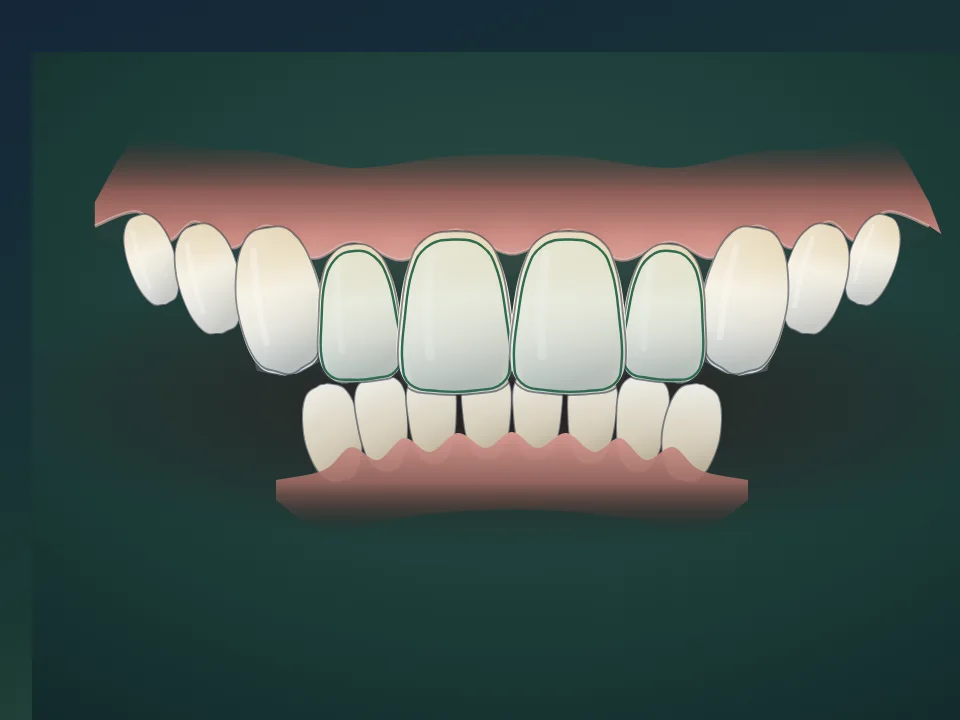
Conceptual smile study Not a photograph · not a patient or treatment result · not a scan, plan, or predicted outcome · clinical review pending
Explore where tooth colour comes from, why edges look different, and what whitening can and cannot change.
Shade
No two smiles share one colour.
Natural teeth range from bright to warm. Canines are often a little deeper than the incisors, and the colour shifts from the neck of a tooth to its edge. Lighting, skin tone and the whites of the eyes all change how a shade reads.
A question to bring“What range of shade would look natural for me?”
Shade
Colour comes from inside.
Dentin, the layer under the enamel, sets a tooth's base tone. Enamel is translucent and filters it, so thicker or thinner enamel changes how light or warm a tooth looks. Both change slowly over a lifetime.
A question to bring“Is my colour mostly in the enamel or in the dentin?”
Shade
Edges let light through.
The incisal edge is mostly enamel, so against a dark mouth it can look slightly grey or blue. That translucency is a sign of natural enamel and part of what keeps a smile from looking flat.
A question to bring“Would whitening change how my edges look?”
Shade
Stain sits on the surface.
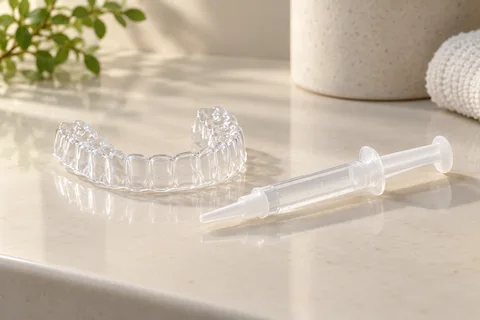
Coffee, tea, red wine and tobacco leave colour on and just under the surface. A professional cleaning removes surface stain; whitening gel acts on colour inside the enamel. They are two different conversations.
A question to bring“How much of my colour is stain, and how much is the tooth itself?”
Shade
Restorations keep their colour.
Crowns, veneers, bonding and tooth-coloured fillings are matched to the teeth around them when they are made. Whitening does not change them, which is why the order of treatment matters.
A question to bring“Do I have restorations that would show after whitening?”
Screens and lighting change colour. This is not a clinical shade guide, and it does not show how your teeth would respond to whitening.
Explore edges, proportions, chips and spaces, and how bonding or veneers relate to them.
Shape
Edges give a smile its character.
Rounded corners read softer, squarer corners read stronger, and a slight taper looks more youthful to many people. Small changes to the edges of the front teeth change the whole impression.
A question to bring“Which edge shape would suit my face and my bite?”
Shape
Width against length.
Front teeth are often described by how wide they are compared with how long. Wear, the gum line and the lips all affect this, so a dentist looks at proportion, the gum line and the bite together.
A question to bring“Are my front teeth short from wear, or from the gum line?”
Shape
Chips and worn edges.
A chipped corner or a worn edge changes a tooth's outline. Depending on the cause and the size, bonding rebuilds the shape with tooth-coloured material in one visit; larger or repeated damage may call for a different approach.
A question to bring“Why did this chip happen, and will it happen again?”
Shape
Spaces and contacts.
A small space between the front teeth can be closed by moving teeth, by adding material, or by reshaping. The cause matters: tooth size, the frenum, the bite or a missing tooth change which option fits.
A question to bring“What is causing my space, and which options would close it?”
Shape
Veneers and bonding.
A veneer is a thin ceramic shell bonded over the front of a tooth; bonding builds a tooth up with composite. Both change shape and colour, and they differ in preparation, strength, cost and maintenance.
A question to bring“How much tooth structure would each option remove?”
Shapes are illustrative. What suits a smile depends on the face, the lips, the bite and the health of the teeth, which an examination assesses.
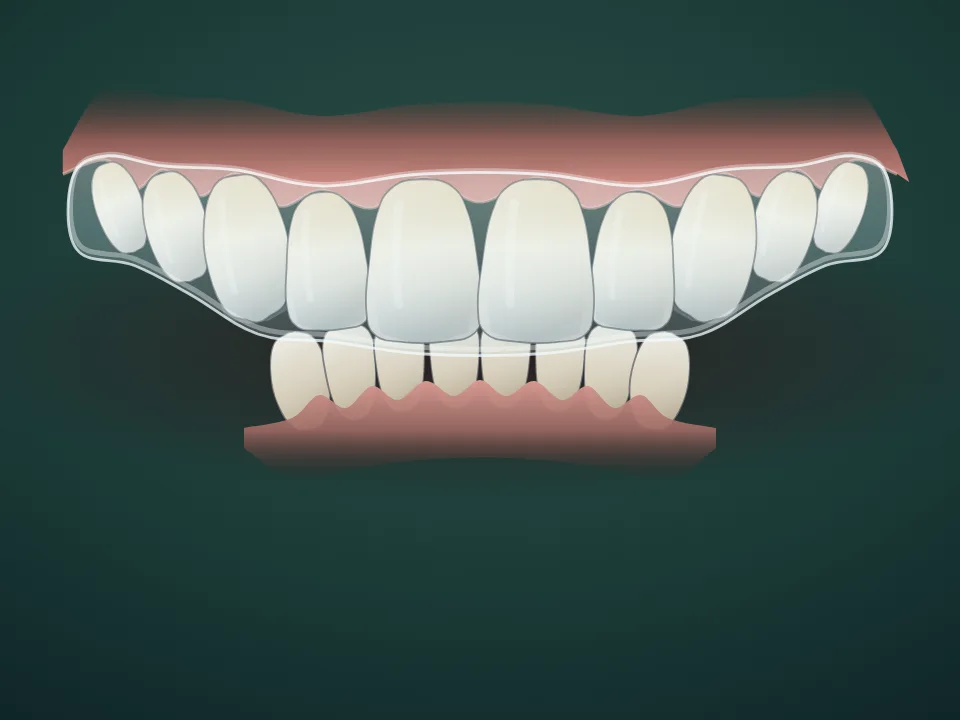
See how crowding, spacing and rotation look, and how clear aligners move teeth in small steps.
Alignment
Not enough room.
When the arch is short of space, teeth rotate or overlap. Making room, by moving teeth back or slimming contacts, is part of planning. This illustration shows the idea, not how space would be made.
A question to bring“Where would the room come from in my case?”
Alignment
Spaces between teeth.
Gaps come from small teeth, a wide arch, missing teeth or habits. Closing them with aligners moves teeth; closing them with bonding adds material. Sometimes a plan uses both.
A question to bring“Should my gaps be closed by moving teeth or by adding material?”
Alignment
A turned tooth.
A rotated tooth is turned in its socket. Aligners can rotate many teeth gradually, but rounder teeth such as canines and premolars are harder to turn and may need small attachments.
A question to bring“Which of my teeth would need attachments?”
Alignment
Small moves, many steps.
Each aligner in a series moves teeth a fraction of a millimetre. You wear each one for the prescribed time, then change to the next. The scrubber shows the idea, not a real plan or timeline.
A question to bring“How many aligners, and how long, would my plan involve?”
Alignment
Keeping the result.
Teeth tend to drift after they are moved. A retainer, worn as prescribed, holds the new position. It is part of the plan from the start, not an afterthought.
A question to bring“What retainer would I wear, and for how long?”
Movement is illustrative. A real plan comes from records, a clinical examination and a prescribed sequence of aligners; some bites need other appliances or a specialist. Explore clear aligners at Legacy.
The illustration is conceptual and does not show any person. It is not a patient or treatment result, not a scan, plan, or predicted outcome, and it is pending clinical review. An examination comes before a treatment plan.
Explore your options
Cosmetic treatments at a glance.
A useful starting point for your conversation with our Eagle River team.
A smile visualization can help you put your goals into words. We’re exploring BiteBot SmileGen as an optional starting point for a conversation with your dentist.
AI-generated simulations are illustrations, not real patient before-and-after photographs, treatment plans, or predictions of your result. An examination is needed to discuss what is appropriate for you.
Cosmetic dentistry, guided by experience and artistry.
A personal conversation is the beginning. Talk with Dr. Penfield and the Legacy team about your goals, your oral health, and the options that deserve a closer look.
The right treatment depends on your goals, and the cost depends on the plan you choose with your dentist. Ask our team for a treatment estimate and about insurance, direct payment, or Cherry financing.
Financing is subject to eligibility and current terms. No application or payment information is collected on this website.
Start with a conversation about what you notice and what matters to you. An examination helps your dentist explain the options, their limitations, and whether any oral-health needs should be addressed first.
Can I discuss more than one cosmetic option?
Yes. You can ask about whitening, veneers, clear aligners, and restorative options together. Your dentist can explain how they differ and whether a staged plan makes sense for your goals.
How can I understand treatment costs?
Ask for a treatment estimate and a discussion of payment options before deciding. Your plan, treatment needs, and insurance benefits can affect your costs. Our team can help you review the next steps.
Does requesting a visit confirm an appointment?
No. A visit request is sent for the team to review. We will contact you to discuss scheduling and confirm the details. You can also call (907) 622-7874.
Ready to explore your options?
Start your smile journey.
Schedule a cosmetic consultation and let’s talk about what’s possible for your smile.