Explore how clear aligners gradually move teeth, what treatment involves, and how Invisalign may fit into your everyday routine at Legacy Dental Arts in Eagle River.
Conceptual smile study Not a photograph · not a scan, plan, or predicted outcome · not a number of aligners or a timeline · clinical review pending
01 of 06 · Consultation and records
Six stages, from the first records to the retainer. Each one changes the illustration.
Stage 01
Consultation and records
Begin with your goals and a clinical assessment of your teeth, gums and bite. Photographs, X-rays and a digital scan record the starting position. The team discusses whether clear aligners may be appropriate and what other options deserve consideration.
A question to bring“Is my bite suited to aligners, or would another appliance fit better?”
Stage 02
Digital planning
The clinician reviews the proposed movements in planning software, and the limits of what aligners can do. The dotted outline shows the idea of a planned position; a real plan comes from your own records.
A question to bring“What movements does my plan include, and will I need attachments or other procedures?”
Stage 03
Your aligner series
Custom aligners are made as a series, each shaped a small step closer to the planned position. Your clinician checks the fit of the first aligners and explains how to wear and care for them.
A question to bring“How many aligners are in my series, and how are they changed?”
Stage 04
Wearing and changing
Aligners only work while they are worn. Follow the daily wear time and change schedule your clinician prescribes; remove them for meals and for cleaning, then put them back.
A question to bring“What should I do if I miss wear time or an aligner does not fit?”
Stage 05
Check-ins and monitoring
Follow-up visits let the clinician compare your teeth with the plan, check the attachments and the fit, and decide whether refinements are needed.
A question to bring“How often will you check my progress, and what happens if a tooth lags behind the plan?”
Stage 06
Retention
Teeth can drift after active treatment. A retainer, worn as prescribed, helps maintain the new position. Your clinician will explain your individual retention plan.
A question to bring“Which retainer will I have, and how long will I wear it?”
The six stages are educational chapters, not a prescribed sequence, a number of aligners or a treatment duration. Some bites need other appliances or a specialist evaluation.
What a clear aligner is made of, where it sits, and what the small attachments do.
Anatomy
A thin, clear shell.
An aligner is a thin thermoplastic shell made from a model of your teeth with a small, planned difference. Seated over the teeth, that difference applies gentle, controlled pressure.
A question to bring“What material are my aligners made from?”
Anatomy
Trimmed at the gum line.
The edge of the shell is trimmed to follow the gum line so it sits on the teeth, not the gum. A smooth edge matters for comfort and speech.
A question to bring“What should I do if an edge feels rough?”
Anatomy
Tooth-coloured attachments.
Small tooth-coloured bumps bonded to some teeth give the aligner something to push against for certain movements, such as rotations. They are removed at the end of treatment.
A question to bring“Which of my teeth would have attachments, and will they show?”
Anatomy
Where the pressure goes.
Each aligner is shaped for one small step. The teeth it moves feel the most pressure in the first days, and a new aligner can feel tight before it settles.
A question to bring“What soreness is normal, and what should I report?”
Anatomy
Caring for the shell.
Clean aligners as instructed, with the products the team recommends; hot water can change their shape. Keep them in their case whenever they are out.
A question to bring“Which cleaning products are safe for my aligners?”
The shell shown here illustrates the relationship to the teeth; it is not a manufacturer’s appliance design.
Scrub a conceptual movement from crowding, spacing or a rotated tooth toward a more aligned arch.
Starting position
Not enough room.
When the arch is short of space, teeth rotate or overlap. Making room, by moving teeth back or slimming contacts, is part of planning. The illustration shows the idea, not how space would be made.
A question to bring“Where would the room come from in my case?”
Starting position
Spaces between teeth.
Gaps come from small teeth, a wide arch, missing teeth or habits. The cause and the location matter when planning; not every gap should be closed in the same way.
A question to bring“Should my gaps be closed by moving teeth or by adding material?”
Starting position
A turned tooth.
A rotated tooth is turned in its socket. Aligners can rotate many teeth gradually, but rounder teeth such as canines and premolars are harder to turn and may need attachments.
A question to bring“Which of my teeth would need attachments?”
The slider is a visual control, not treatment time or percentage complete. Bite relationships such as overbite, underbite and crossbite are explained further down this page.
The illustration is conceptual and does not show any person. It is not a scan, plan, or predicted outcome, does not represent a number of aligners or a treatment duration, and is pending clinical review. Invisalign is a brand of clear aligner; suitability is decided by a clinical evaluation.
Understand your alignment
What can Invisalign address?
Explore common alignment concerns that may be treated with clear aligners.
Crowding
Making room for alignment.
Crowding means there is not enough room for teeth to line up within the dental arch. Teeth may be rotated or displaced.
The amount of space needed, gum health, and the planned movements help determine the treatment approach. This example does not show how space would be created.
Spacing
Understanding the spaces.
Spacing describes gaps between teeth. The cause and location of the spaces matter when planning treatment.
Not every gap should be closed in the same way. Missing teeth, tooth size, and the bite may change the options.
Overbite
A closer look at vertical overlap.
Overbite describes how much the upper front teeth overlap the lower front teeth vertically. Some overlap is normal; an excessive overlap is often called a deep bite.
Overbite is different from overjet, which describes horizontal distance. A clinical examination is needed to assess the bite.
Underbite
When the lower teeth sit ahead.
An underbite may involve lower front teeth positioned ahead of the upper front teeth when the teeth meet.
Tooth position and jaw relationships both matter. Some cases need other appliances, specialist evaluation, or treatment beyond clear aligners.
Crossbite
How the upper and lower teeth meet.
In a crossbite, one or more upper teeth bite inside the lower teeth. It can affect the front teeth or teeth farther back.
This diagram shows one simplified front-tooth relationship, not every type of crossbite. A clinician evaluates the complete bite.
Educational schematics only, pending clinical review. These are not before-and-after results or an eligibility assessment. Different appliances or specialist evaluation may be appropriate.
A plan shaped around you
How Invisalign works.
A closer look at the steps in your treatment journey.
Authentic Legacy practice photography.
01 / 04
Consultation and evaluation
Begin with your goals and a clinical assessment of your teeth, gums, and bite. Discuss whether clear aligners may be appropriate and what other options deserve consideration.
Bring your questions about comfort, appearance, and everyday routines.
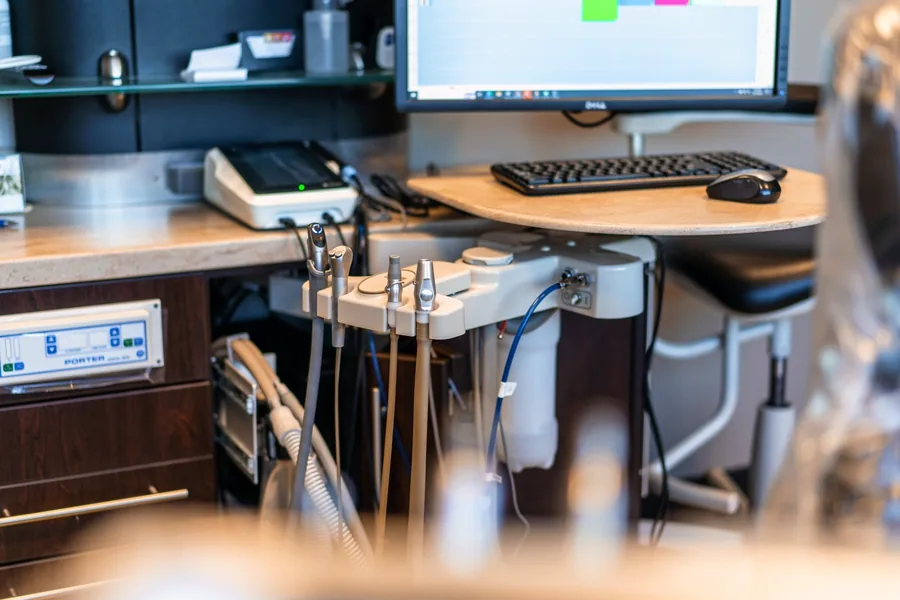
Legacy practice equipment; not a patient treatment plan.
02 / 04
Digital planning
Records such as photographs, X-rays, and digital scans help inform an individual plan. The clinician reviews the proposed movements and the limitations of treatment.
Ask what your plan involves, including any additional procedures or appliances.
Existing Invisalign packaging photograph from Legacy.
03 / 04
Your aligner series
Your clinician checks the fit of your custom aligners and explains how to wear and care for them. Change aligners only on the schedule prescribed for your treatment.
The five studio views are educational chapters—not a prescribed aligner sequence.
Allison, dental assistant. Treatment decisions are made by your clinician.
04 / 04
Monitoring and retention
Follow-up visits allow the clinician to review your progress. After active treatment, discuss the retainers and ongoing care needed to help maintain tooth position.
Ask how your progress will be monitored and what retention will involve.
Make it part of your day
Life with Invisalign.
Practical guidance for everyday confidence.
Eating & drinking
Remove. Enjoy. Care for your smile.
Remove aligners for meals and beverages other than plain water. Clean your teeth and aligners as directed before putting them back in.
Use the case when aligners are out; wrapping them in a napkin makes them easy to lose.
Daily wear
Consistency is part of the plan.
Aligners depend on regular wear. Follow the daily wear time and change schedule your treating clinician gives you.
If you miss wear time or an aligner does not fit, contact the team rather than advancing on your own.
Cleaning
Keep a simple cleaning routine.
Brush and clean between your teeth, and clean aligners according to the instructions supplied with them. Rinse them before putting them back in.
Avoid hot water, which may change an aligner’s shape. Ask the team which cleaning products to use.
Adjusting
A little adjustment can be normal.
New aligners can cause temporary pressure or soreness. Speech may feel different at first as you adapt to wearing them.
Contact the team about significant or persistent discomfort, sores, or an aligner that is damaged or not fitting.
Travel & routines
Take your routine with you.
Carry your aligner case and oral-care supplies. Plan around meals and cleaning so you can follow your prescribed wear routine away from home.
Ask your clinician what to pack for a longer trip and what to do if an aligner is lost.
Retainers
Alignment needs ongoing attention.
Teeth can move after orthodontic treatment. Retainers help maintain their position, and your clinician will explain your individual retention plan.
Retainers and active aligners have different jobs. Follow the instructions for the appliance you are prescribed.
Your treating clinician’s instructions take precedence over this general overview.
Real people. Thoughtful care.
Your smile, guided by real people.
Allison and the Legacy Dental Arts team help you feel informed and supported. Our team takes time to understand your goals, explain your options, and develop an appropriate treatment plan.
Different approaches. A decision to make with your clinician.
Clear aligners and traditional braces. Select a feature for an explanation.
Feature
Invisalign clear aligners
Traditional braces
Appearance
Clear removable trays
Fixed brackets and wires
Removability
Removed for meals and cleaning
Remain attached
Daily responsibility
Consistent prescribed wear
Appliance care and food precautions
Treatment suitability
Depends on your individual case
May suit some complex movements better
Retention afterward
Generally required
Generally required
Two different kinds of appliance.
Aligners cover the teeth with clear material. Traditional braces use brackets and wires. Neither is an invisible appliance; attachments may also be part of an aligner plan.
Different everyday routines.
Aligners can be removed when instructed, then returned to the teeth. Fixed braces stay in place during eating and cleaning.
Both need your care.
Each approach involves oral hygiene and follow-up. Aligners also depend on following the prescribed wear schedule; braces require care around brackets and wires.
The right approach starts with an exam.
The planned tooth movements, bite, oral health, and your circumstances help guide the choice. A specialist assessment may be appropriate.
Keeping the result takes care.
Retention is commonly needed after either approach. Your clinician explains the type of retainer and wear schedule appropriate for you.
Simplified appliance illustrations, pending clinical review. This comparison does not determine which treatment is appropriate for you.
Helpful answers
Common questions about Invisalign.
How long does Invisalign treatment take?+
Timing depends on the tooth movements, bite, treatment plan, and how treatment progresses. Your clinician can discuss an estimate after an assessment. The studio’s five chapters do not represent a treatment duration or number of aligners.
Does Invisalign hurt?+
Temporary pressure or soreness can occur with a new aligner. Contact the team if pain is significant or persistent, or if an aligner causes sores or does not fit.
How much does Invisalign cost?+
An individual treatment plan is needed to discuss cost. Ask the team for an estimate and information about insurance and financing. Benefits, eligibility, and financing approval vary.
Can adults use Invisalign?+
Adults may be candidates for clear-aligner treatment. Suitability depends on oral health, the bite, and the movements needed—not age alone. A clinical assessment is the starting point.
Will aligners be noticeable?+
Clear aligners are designed to be discreet, but they are not invisible. Tooth-colored attachments or other features may be included in a treatment plan and can be visible.
What can I eat with Invisalign?+
Remove aligners for meals and beverages other than plain water. Follow your clinician’s instructions for cleaning your teeth and aligners before replacing them.
How often do I wear my aligners?+
Wear them for the daily duration and change interval prescribed by your clinician. Contact the team if you miss wear time or have trouble with fit; do not change the schedule yourself.
How do I clean my aligners?+
Follow the cleaning instructions supplied with your aligners and your clinician’s advice. Keep up brushing and cleaning between your teeth. Avoid hot water and ask which cleaning products are appropriate.
Will I need retainers afterward?+
Retention is generally part of care after active orthodontic treatment. Your clinician will discuss retainers and a wear schedule to help maintain tooth position.
Is Invisalign right for my case?+
Only a clinical evaluation can answer that. Teeth, gums, bite, planned movements, and your circumstances all matter. Some cases need a different appliance or specialist evaluation.
Explore your smile goals
What would you like to understand?
Choose a starting point for your conversation. No personal information is requested.
↗
Look beyond the front teeth.
Explore how tooth position fits into the whole bite. The studio is a general illustration, not a preview of your own result.
Educational navigation, not a suitability assessment. Your choices stay on this page and are not submitted or saved.
Planning your care · Payment options
A thoughtful plan includes the cost.
Your aligner plan and any insurance benefits will help determine your out-of-pocket cost. Ask our team for a treatment estimate and about insurance, direct payment, or Cherry financing.
Financing is subject to eligibility and current terms. No application or payment information is collected on this website.