
Natural tooth
Enamel
The hard outer layer of a natural crown.
Enamel is the hardest substance in the body. It is thickest at the cusps and thins to nothing at the gumline, which is why the neck of a tooth can feel sensitive.
Dental implants · Eagle River, AK
Explore tooth replacement at Legacy Dental Arts in Eagle River. See how an implant restoration is built, how it compares with a natural tooth, and what each stage of treatment involves. Then bring your questions to a consultation.
Signature experience The Implant Explorer
01 of 05 · Consultation and planning
Select any structure to learn what it is and what it does.
Natural tooth
Implant restoration
Gum and bone
Natural tooth
The hard outer layer of a natural crown.
Enamel is the hardest substance in the body. It is thickest at the cusps and thins to nothing at the gumline, which is why the neck of a tooth can feel sensitive.
Natural tooth
The living core beneath enamel.
Dentin makes up most of a tooth. It is softer than enamel and contains tiny tubules that connect to the nerve, so decay that reaches dentin moves faster and can be felt.
Natural tooth
Nerve and blood supply inside the tooth.
The pulp chamber and root canal carry the nerve and blood vessels that keep a tooth alive and sense temperature and pressure.
Natural tooth
A living cushion between root and bone.
Thousands of tiny fibres suspend the root in its socket. They let a natural tooth flex very slightly under chewing forces and sense pressure. An implant has no ligament.
Gum and bone
The soft seal around teeth and implants.
Healthy gum tissue hugs the neck of a tooth or the implant crown and protects the bone underneath. Daily cleaning keeps this seal healthy for both.
Gum and bone
The foundation that holds everything.
A dense outer layer surrounds a lighter, honeycomb-like interior. Bone needs stimulation from a tooth root or an implant to stay full; after a tooth is lost it slowly changes shape.
Implant restoration
The visible replacement tooth.
A custom ceramic crown is shaped and shaded to fit beside its neighbours. It is the only part of the restoration you normally see.
Implant restoration
The connector between crown and fixture.
The abutment emerges through the gum and gives the crown something to hold on to. It is fastened to the fixture with a small screw.
Implant restoration
The fastener inside the assembly.
A precision screw runs through the abutment into the fixture. It is tightened to a measured torque so the parts behave as one unit.
Implant restoration
The titanium post that replaces the root.
The threaded fixture is placed in the jawbone. Over a healing period bone grows into direct contact with its surface, a process called osseointegration.
Show or hide gum, bone and the restoration to see how they relate.
Turn the gum off to see how the abutment emerges through the tissue, or turn the bone off to compare the shape of a natural root with a threaded fixture. Everything above the gumline is what you see in a smile; everything below is what keeps it there.
Separate the parts to see how an implant restoration fits together.
Separation is illustrative. It is not an assembly sequence or a surgical step.
Follow the stages from planning to long-term care.
Stage 01
The site of the missing tooth is examined with imaging. The team studies bone height, gum health and the bite, and plans where a fixture could sit. Nothing is placed at this stage.
A question to bring“Who would provide each stage of my care, and is any referral needed?”
Stage 02
In a planned surgical visit the fixture is placed in the jawbone. The gum is closed over it, or around a small healing cap, while it heals. Anesthesia and comfort options are agreed beforehand.
A question to bring“What anesthesia and comfort options apply to me?”
Stage 03
Over the following months bone grows into direct contact with the fixture surface. The timeline varies from person to person, and a temporary tooth may be used in the meantime.
A question to bring“How long might my healing take, and will I have a temporary tooth?”
Stage 04
Once the fixture has integrated, the abutment is attached and a custom crown is fitted and checked against the bite and the neighbouring teeth.
A question to bring“Will my crown be screw-retained or cemented, and why?”
Stage 05
Daily cleaning around the crown and regular check-ups protect the gum seal and the bone. An implant needs the same attention as a natural tooth.
A question to bring“What cleaning routine and follow-up visits will I need?”
Sequence, healing time and temporary teeth vary by person. Your dentist will explain your individual plan, who provides each stage, and whether a referral is appropriate.
See what is the same and what is different.
Natural tooth
A natural root is suspended in bone by the periodontal ligament, a living cushion that senses pressure and lets the tooth flex very slightly.
Implant restoration
A fixture is held by direct contact with bone. It has no ligament, so it does not flex and can feel different under heavy pressure.
Natural tooth
Enamel over dentin. Both are living tissues that can decay and that register temperature.
Implant restoration
A ceramic crown cannot decay or feel temperature, but the gum around it can still become inflamed without daily cleaning.
Natural tooth
Bone stays full while a root is present to stimulate it.
Implant restoration
A fixture also stimulates the bone, which is one reason implants are discussed after a tooth is lost.
Illustrations are conceptual and not to scale. They do not show your anatomy, a specific implant system, or a treatment plan, and they are pending clinical review. An examination is needed to discuss suitability, risks, costs and alternatives.
013D cone-beam planning before surgery
02Periodontics-trained dentist evaluates bone and gums
03Sedation available · Cherry financing
Why implants
Tooth loss affects chewing, speech, and—over time—your facial structure, as the bone beneath a gap slowly shrinks. Your dentist can explain how implants may help maintain the bone around a replacement tooth.
An implant acts as a replacement root. Your dentist will assess the health and amount of bone available.
A fixed implant restoration stays in place. Ask about cleaning, food choices, and any limitations during healing and afterward.
An individual implant restoration does not use neighboring teeth for support. A conventional bridge may require preparation of those teeth.
Compare the upfront cost, maintenance, and expected longevity of each option with your dentist.
One implant, several, or a few that lock a denture firmly in place.
Custom crowns shaded and shaped to match your smile.
Find your next question
Answer a few quick questions to help guide your conversation with our team.
This guide does not assess eligibility or recommend treatment. Your choices stay on this page; they are not saved, sent, or added to your appointment request.
Your conversation starts here
Explore the implant process and the alternatives, then bring your questions to a consultation.
Read how dental implants work Request a consultationWhy Legacy for implants
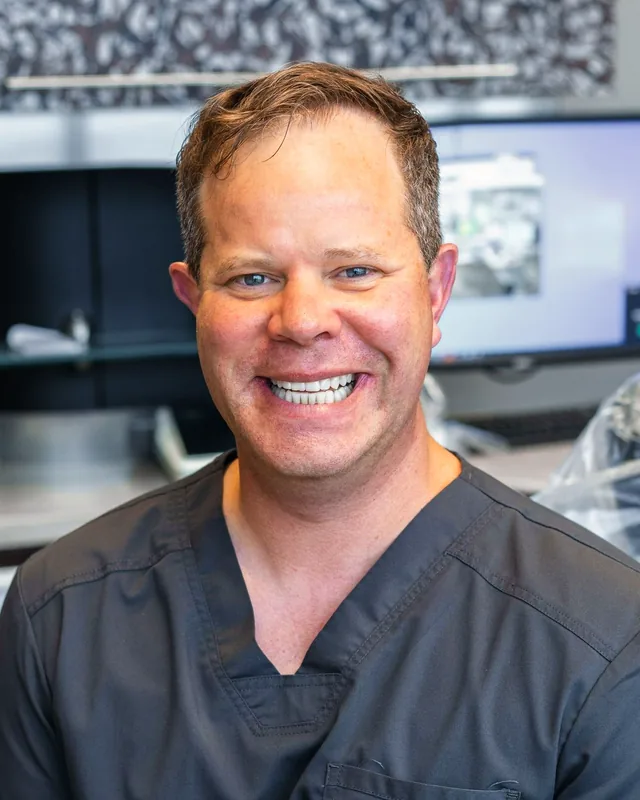
Dr. Penfield holds masterships through the International Congress of Oral Implantologists and has trained at the Kois Center. Dr. Cady, who completed a periodontics residency, evaluates and treats the gums and bone that make implants succeed long-term. Your team will explain which parts of your care can be completed here and whether a referral is appropriate.
Meet the doctors →Planning your care · Payment options
Implant costs depend on the plan, including imaging, placement, restoration, and any additional care. Ask our team for a treatment estimate and about insurance, direct payment, or Cherry financing.
Financing is subject to eligibility and current terms. No application or payment information is collected on this website.Implant questions
An implant fixture is placed in the jaw to support a replacement tooth. Bone heals around the fixture; an abutment connects it to a crown or other restoration. Treatment sequence and healing vary. Your dentist will explain the benefits, risks, and alternatives.
Treatment can take several months or longer. Healing, any grafting, and the type of restoration affect the timeline. Ask for a plan specific to your oral health, including temporary tooth options.
Cost depends on the number of implants, any grafting, and the restoration. Ask for an itemized estimate covering imaging, placement, abutment, crown, and any sedation or temporary restoration. Call to confirm consultation and imaging fees before your visit. Financing is subject to approval and terms.
An examination is needed to assess your gums, bone, remaining teeth, and overall health. Smoking and some health conditions can affect healing. Discuss your history, goals, and alternatives with the dental team.
Ask the treating clinician about anesthesia, comfort options, and recovery for your procedure. The team will explain which services are available here, who would provide each stage, and whether referral is needed.
Follow the cleaning and follow-up schedule recommended for your restoration. Implants need ongoing care and monitoring; their longevity varies and complications can occur.

Ready to explore dental implants?
Schedule a consultation to explore your options with our team in Eagle River.
Denali National Park · NPS Photo / Tim Rains · Public domain. Landscape is not the view from our practice.
Private to your browser · no messages sent to Legacy
Please do not enter your name, phone, insurance, or health details.